
Achievements
Players see your game’s achievements on its page in the launcher, with how rare each one is and the experience it gives:
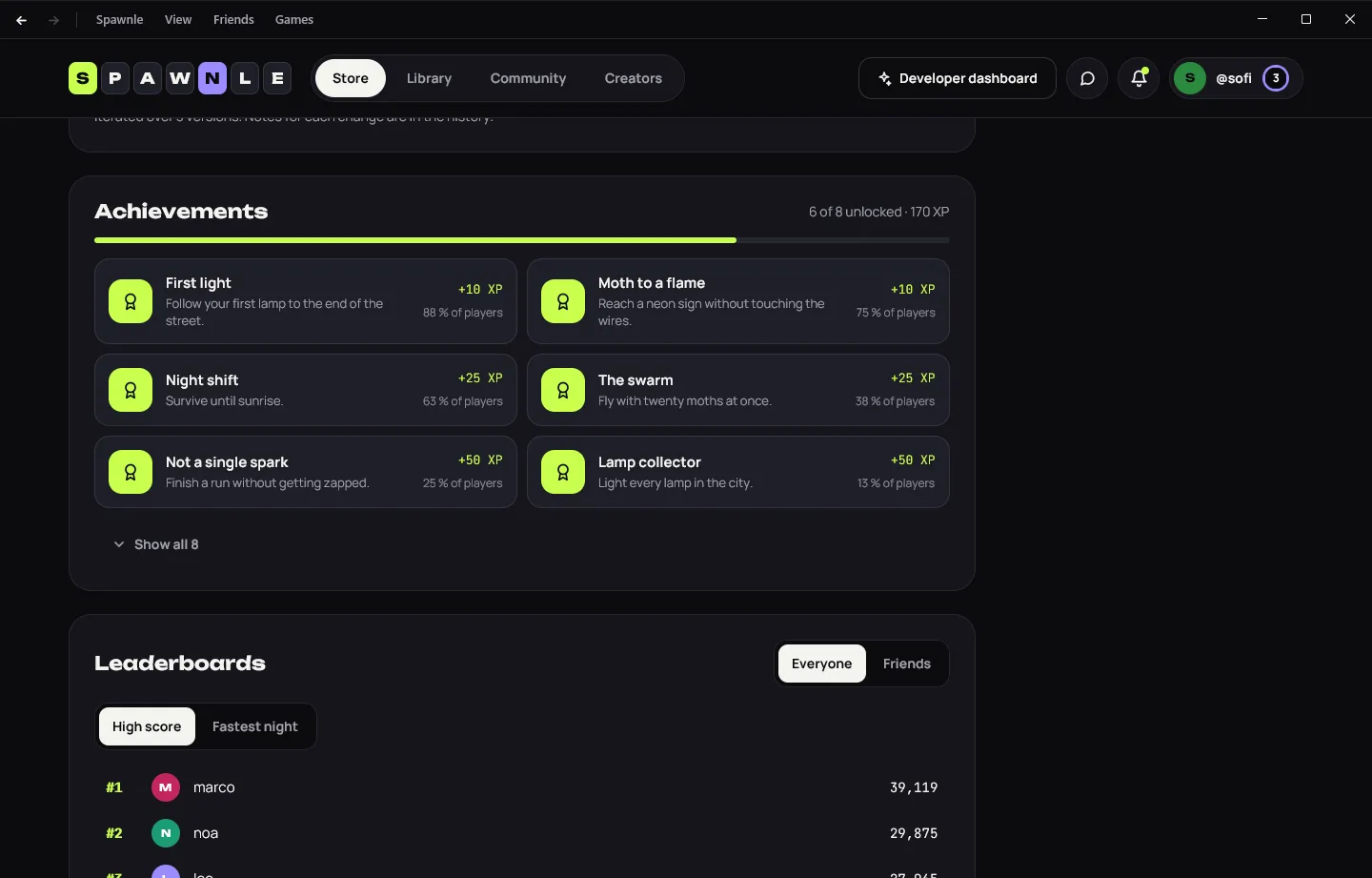
Define them
Section titled “Define them”In the launcher, open Developer dashboard, find your published game and press SDK. For each achievement:
| Field | |
|---|---|
| Key | What your code uses: first-win. 1–40 characters, lowercase letters, digits, - and _. Keep it stable — changing it makes a new achievement. |
| Name | What players read: “First win”. Up to 60 characters. |
| Description | How to get it: “Win your first round”. Up to 200 characters. |
| XP | Spawnle experience it gives, up to 100. |
| Hidden | Its name and description stay secret until unlocked. |
A game can have up to 200 achievements, worth up to 1,000 XP in all.
Unlock them
Section titled “Unlock them”const result = await spawnle.achievements.unlock("first-win");
if (result.newly) { showToast(`🏆 ${result.name} · +${result.xp} XP`);}Unlocking an achievement the player already has is fine — newly is false
and nothing else happens. Unknown keys fail with not_found.
When an achievement is new, Spawnle also:
- notifies the player in the launcher,
- adds its XP to the player’s level (XP from your own games does not count, so developers cannot farm their own),
- updates the share of players who have it.
List them
Section titled “List them”const list = await spawnle.achievements.list();for (const a of list) { console.log(a.key, a.unlocked, `${a.percent.toFixed(1)}% of players`);}Hidden achievements the player has not unlocked come back with an empty
name and description — show a padlock and “Hidden achievement”.
Good achievements
Section titled “Good achievements”- Reward play, not grind: “Beat the boss without taking damage” beats “Play 100 hours”.
- Mix easy ones (most players get them) with a few rare ones.
- Use hidden achievements for secrets and story spoilers.